How to plan youth mission trips that impact faith formation all year long
 Rachel Dodd | Mar 18, 2026
Mission trips and service projects can be powerful moments in a young person’s life. For youth leaders, planning a mission trip isn’t just about logistics—it’s about creating experiences that shape students’ faith through service.
Many youth leaders know this tension well. You plan mission trips and local community projects because you want students to grow spiritually by serving others. But your energy gets pulled toward fundraising, transportation, meals, safety, schedules, and recruiting volunteers. Discipleship can unintentionally slip into the background, treated as something that hopefully happens along the way.
The truth is this: mission trips don’t automatically form faith—intentional discipleship does. When service is paired with relational leadership, prayer, and reflection, students are far more likely to experience a faith that feels real, meaningful, and connected to their everyday lives.
Planning youth mission trips for lasting discipleship
Here are seven practical ways to plan youth mission trips that form faith, not just memories:
1. Start with faith formation, not the destination
It’s tempting to begin mission planning with where you’re going or what you’ll do. But faith-centered trips begin with a different question:
Who do we hope students are becoming through this experience?
When leaders clarify spiritual goals early, everything else becomes more focused. Instead of asking only logistical questions, such as:
- What project will we complete?
- How many young people can we take?
Ask faith formation-driven questions like:
- How do we want students to experience God at work through this trip?
- How will this experience connect to Jesus’ example of servant-hearted leadership?
- How will the community we serve teach them about faith, service, and justice?
- What practices will help them notice their emotions, questions, and growth?
This shift helps leaders design trips that are manageable, meaningful, and aligned with discipleship.
2. Prepare hearts, not just schedules
Teenagers don’t arrive at mission trips spiritually neutral. They bring excitement, anxiety, assumptions, and expectations—often all at once.
Faith formation deepens when leaders intentionally plan time and space before the trip for students to name and process those emotions through prayer and Scripture. Guided prayer practices, journaling, and group discussion help students:
- Reflect on why they are serving
- Identify worries or fears
- Acknowledge anticipation and hope
- Center themselves on Jesus’ call to love and serve others
Preparing hearts before the trip builds spiritual resilience. This helps young people feel more grounded when challenges arise, and more open to growth when God stretches them.
Pressed for time? Check out Praying to Prepare our Hearts to Serve, an On-the-Go Prayer Activity available in the FYI store. You’ll lead your group to think about Jesus’ example of servant-hearted ministry, then pray in their own words about their worries and hopes for an upcoming mission, ministry, or service experience.
3. Build reflection into your youth mission trip schedule
One of the most common missed opportunities on mission trips is reflection during the experience.
Days and weeks of service are often full and exhausting. Without intentional pauses, students may not recognize what they’re learning until the trip is over—or may never connect the experience to faith at all.
Support formation through your youth mission trip planning by building in simple, repeatable reflection rhythms, such as:
- Short daily prayer journaling
- Evening check-ins that name highs, lows, and emotions
- Scripture reflections tied to service themes
- Questions that help students notice God’s presence in ordinary moments
These practices don’t need to be long or complicated. What matters is consistency. Reflection during your youth mission trip or project helps students make meaning in real time, not just in hindsight.
4. Teach teenagers why we serve, not just that we serve
Many teens have participated in service days and projects—but fewer have been guided to understand the deeper why behind them.
Faith formation grows when leaders help students connect service to Jesus’ humility and love, and invite them to explore God’s heart for justice and mercy. What’s more, intentional discipleship through service strengthens young people’s own identity as followers of Christ as they grow to understand the dignity and worth of those they serve.
Discussion-based teaching encourages students to wrestle honestly with questions like:
- What motivates us to help others?
- How do power, privilege, and humility show up in service?
- How do we reflect God’s love through our attitudes, not just our actions?
When students are invited into thoughtful conversation, service shifts from obligation to calling.
Let us help you teach for transformation while you’re on the go! Talking About Showing God's Love While We Serve is a low-prep, easy-to-lead discussion guide available in the FYI store.
5. Build relationships, not just teams
Mission trips form faith best when students feel known, supported, and safe. Strong relational leadership makes reflection deeper and service more meaningful. As a leader, you can cultivate this by:
- Training adult volunteers to listen more than they lecture
- Creating small groups where students can share openly
- Encouraging mutual care among students
- Modeling vulnerability and curiosity as leaders
These relational dynamics matter just as much as the service work itself. Students are more likely to engage spiritually when they trust the people guiding them.
6. Don’t skip the post-mission trip planning
What happens after the mission trip often determines whether the experience shapes long-term faith formation or fades into memory.
Follow up with a few gatherings that help your teenagers:
- Reflect on what they learned about God, themselves, and the world around them
- Name how the experience changed their perspective
- Identify a “52-week takeaway” they hope to live out the rest of the year
- Recognize God at work in their daily life beyond the trip itself
Without intentional follow-up, even powerful experiences can feel disconnected from everyday life. This is the moment to help students tell their stories—to articulate what God did and why it matters. Writing testimonies, sharing in small groups, or speaking to their church community builds confidence and brings their learnings with them into day-to-day life.
7. Plan for sustainability, not perfection
Well-planned mission trips are not about doing everything with flawless execution—they’re about thoughtful planning, realistic expectations, and spiritual care.
It’s not uncommon for youth leaders to feel stretched thin as they plan and lead mission trips and service projects. That’s exactly why having practical tools (such as checklists, reflection prompts, and conversation guides) can make such a difference. When you feel equipped, you’re better able to focus on students’ spiritual growth instead of constantly reacting to logistics.
From mission trip planning to lifelong faith
Young people are more likely to develop a faith that lasts when they experience discipleship that is relational, rooted in Jesus, and lived out through service. Your ministry’s mission trips and service projects offer them vital opportunities to embody that vision when you plan for formation at every stage: before, during, and after students serve.
Equipping students to pray, reflect, ask questions, and tell their stories will give them more than a meaningful trip. It will help them see that their faith is not separate from the world, but alive within it. It offers them faith formation that lasts.
Planning a teen mission trip or project? Start here.
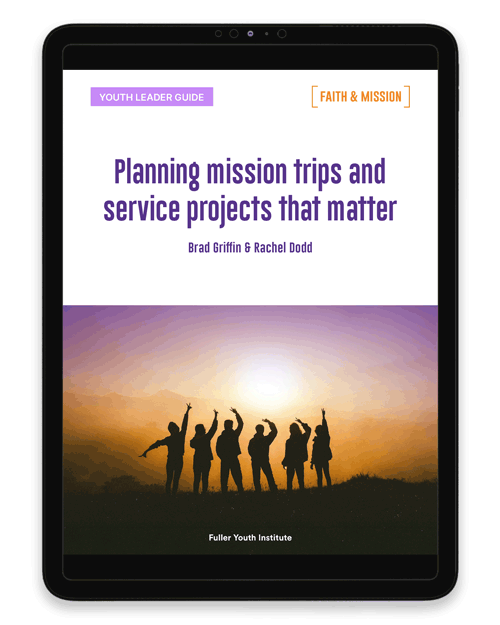
Mission trips and service projects can be meaningful for students—but between logistics, volunteer coordination, training your team, and caring for students’ spiritual growth, it’s easy for leaders to feel stretched thin.
We’ve created a new guide to help you plan a thoughtful, well-organized, and transformational mission trip or service project. Inside, you’ll find practical tips, checklists, team conversation starters, and reflection tools to support students before, during, and after they serve, connecting their experiences to faith and everyday life.
Find Planning Mission Trips And Service Projects That Matter in the Faith & Mission collection in our store.

Rachel Dodd is a spiritual director, writer, and Managing Editor at the Fuller Youth Institute. She has a BA (Church Music and Youth Ministry) from Point Loma Nazarene University, and completed her MDiv and DMin (Spiritual Formation and Direction) at Fuller Theological Seminary. Having served students and families in the UK and US for over 15 years, Rachel loves writing to share stories and equip those following their own calling in ministry. She and her husband, Carl, now live in the beautiful Pacific Northwest, and have two daughters.
More from this author
More From Us






Sign up for our email today and choose from one of our popular free downloads sent straight to your inbox. Plus, you’ll be the first to know about our sales, offers, and new releases.