Meet the Gen Alpha “Nones”: The teens asking quiet questions about God
 Brad M. Griffin | Feb 5, 2026
When I go to a local school play, soccer game, or band performance, I’m always there to see my own kids or students I know from our church’s youth ministry. But I often find myself wondering about the other young people—the ones I don’t know.
I wonder about their friendships, their questions, their families. I wonder whether they’re connected to a church or faith-based group, or what it might take to spark their curiosity about God. I wonder what kinds of messages they hear about Christians in their feeds or from their friends.
Maybe you find yourself wondering some of the same things.
In a previous post about Gen Alpha (born 2010 and later) based on new research with today’s changing generation of teenagers, we mentioned non-religious young people. They’re the ones who probably aren’t coming to youth group. Let’s take a closer look at this group of teenagers.
Meet the Gen Alpha Nones
In religious research in the US, those who choose no religious affiliation are often called “Nones.” Whether or not that’s a helpful designation, Nones have been a curiosity of researchers and leaders for the past couple of decades as their numbers have grown dramatically and, more recently, leveled off. According to Pew Research Center, about 28% of US adults now identify as religiously unaffiliated.
Young adults represent the largest cohort of Nones. But most existing research (including the very fascinating ongoing Nones Project) has focused primarily on adults over age 18. We wanted to better understand what’s happening among teenagers ages 13-17, so our team launched new research into how Gen Alpha (born 2010 and later) is exploring identity, belonging, purpose, faith, and spirituality.
We defined Nones in our research as those who selected one of two “No” responses when asked, “Do you consider yourself part of a religion or spiritual tradition? We gave 10 different options, including:
- No — I don’t belong to a religion, but I think of myself as spiritual
- No — I don’t really think about faith or spirituality
Combined, this group represented 25% of our overall sample.
Some Nones are open to faith
“I finally came to the realization that I have not felt the presence of religion in my life. I’ve done things like going to church and youth group with my family, but I haven’t felt any religious connection to that. I have not had any moments with God. I've not felt any faith in a divine being.”
While we’ve heard stories like this from young people who were raised in church but have become closed to faith, many teens in our study who aren’t religious don’t report a faith background at all.
Interestingly, no top reason emerged when we asked those who don’t practice any faith or religion an open-ended question about why. The most common response themes include:
- No interest in religion
- No experience with religion
- No belief in any particular religion
- Feeling unsure or not knowing where to start
Few sound antagonistic, and just 2% mention negative experiences with religion or religious trauma. In other words, for many Nones, faith either isn’t on their radar or they may be open to it, but it’s not something they’re actively opposing. That’s good news for youth leaders.
Perhaps most important when we think about outreach to this group, 41% of Nones say they aren’t interested in religion at all, which means over half are potentially spiritually open. The most open young people may be the 1 in 5 who say they’re “still figuring it out.” Another 18% say “I’m spiritual but not really religious.”
Nones are more likely to learn about faith and spirituality online than from family or friends, and say they’re most comfortable exploring spirituality alone. These are key differences from religiously engaged young people, who name family, religious leaders, and friends as their main influences and who prefer to practice their faith with others.
Like the rest of our research sample, Nones are concerned about being judged by adults. When we asked what makes an adult trustworthy, they said someone who listens without judging. And when we asked, “What could faith communities do to better connect with teens?” all young people resoundingly said: Be more welcoming and less judgmental. But this response was even stronger for Nones than for Christian teens.

Sources of belonging and support look different for Nones
One overall pattern we observed among Nones is that friends become increasingly important as trusted sources of support for identity, belonging, and purpose.
Across the board, Nones are more likely to:
- Find belonging outside the home with friends
- Find support online and through social media
- Say they struggle with their mental health
- Say they have no one who helps them feel like they belong
- Say they have no one they trust to talk to when figuring something out about themselves
On a separate relational support scale, they’re significantly less likely to say they have adults in their lives who they trust to show up for them, who give them space to be themselves, or who take their thoughts and feelings seriously.
What might be going on here? We can’t say for sure where to attribute these differences in social support. These findings aren’t significantly different across family types, and Nones are no less likely to report growing up with parents as their primary caregivers.
Other research has found similar patterns. For example, Young Life’s Relate study found that Nones report a much lower sense of familial belonging overall, and about half report not having someone they can talk to about spiritual or religious questions or doubts. More positively, Springtide Research Institute found a connection among Gen Alpha 13-year-olds between religion, spirituality, and human flourishing. Even those who consider themselves only slightly religious report greater life satisfaction, sense of belonging, and sense of purpose.
Not all Nones may be struggling or feel unsupported, but young people engaged in faith may have natural advantages in their support system inherent to being part of a particular faith and a local church or parachurch community.
Non-religious teenagers need the church to listen, not assume
What does all of this mean for youth ministry? It’s easy to encounter an unchurched teenager and make several assumptions right away. But when it comes to how we think about these young people and approach ministry with them, it’s best to practice withholding assumptions and judgment and instead lead with listening.
Never assume unchurched means uninterested in God.
Some teens may never have set foot in a church, but that doesn’t mean they aren’t asking questions and seeking faith. Since many trust a friend first, help your more engaged students talk about faith in ways that keep conversations open and curious.
Never assume a churchgoing teenager is all-in on Jesus.
Nones aren’t just “out there,” they’re also probably in your youth room. Your posture toward questions and doubts can help young people stay open to experiencing God regardless of their current level of belief or commitment. And when a teenager feels certain they belong, they’re more open to believe.
Get outside of your ministry.
Go to where teenagers are. Pay attention. If you’re in a church-based role, spend time each week in the community or at local schools where you can encounter or even just observe teenagers, be interested, and pray about what God may be doing in their lives.
Discover new findings for real ministry impact with today’s Gen Alpha teens
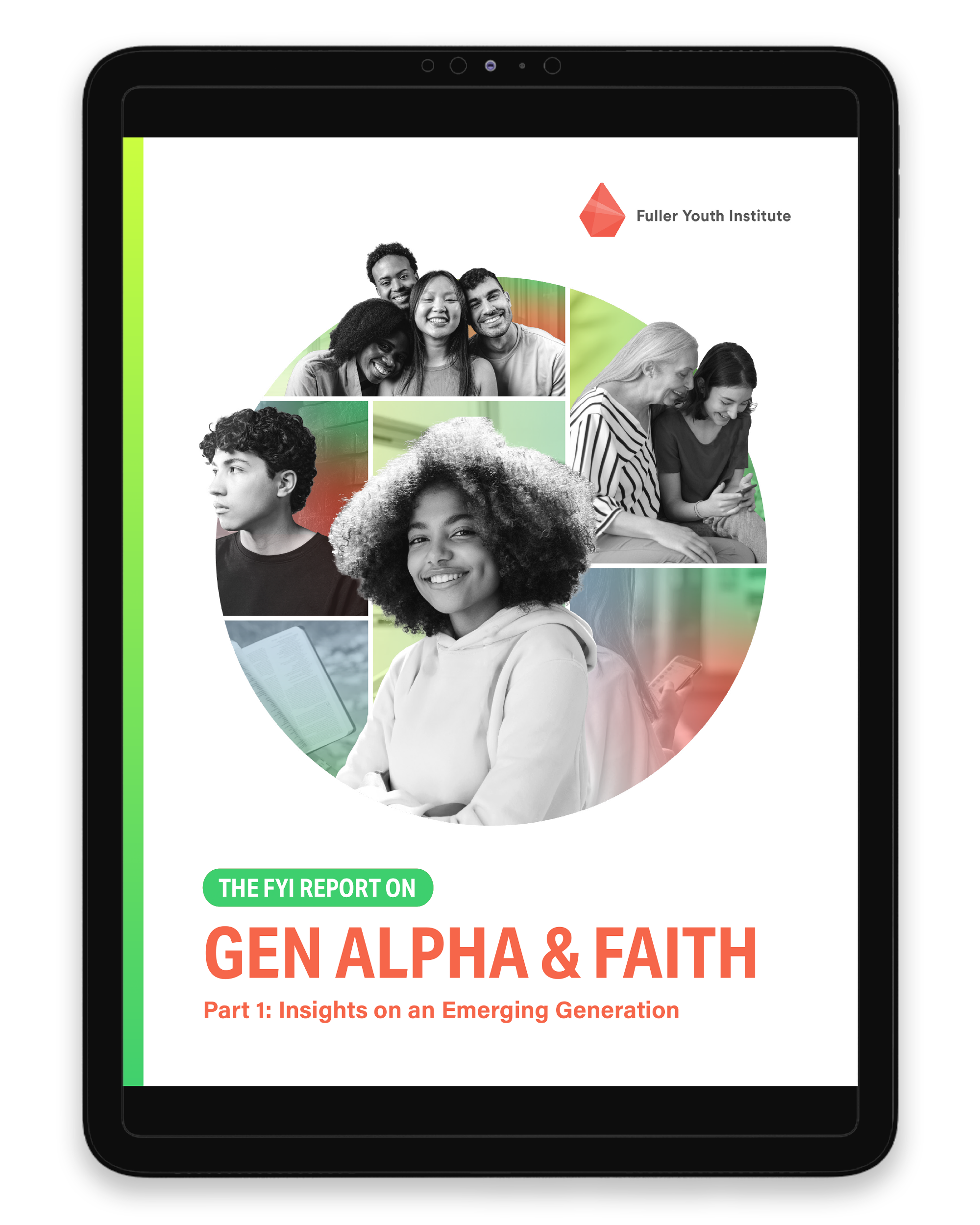
We’ve launched a brand-new research report designed specifically to help ministry leaders like you disciple faith effectively with today’s teens.
The FYI on Gen Alpha goes beyond trends and theory, equipping you with practical, ministry-ready insights you can apply today. Inside the report, you’ll discover:
- How Gen Alpha teens are thinking about faith and spirituality
- Why family matters more than ever
- What helps faith stick—and what pushes teens away
- Practical guidance for ministry that keeps conversations open and trust strong
Fill out the form and download the full report today and equip your ministry with insights to disciple today's teens for lasting faith.

Brad M. Griffin is the Senior Director of Content & Research for the Fuller Youth Institute, where he develops research-based resources for youth ministry leaders & families. A speaker, writer, and volunteer pastor, Brad is the coauthor of over fifteen books, including Faith Beyond Youth Group, 3 Big Questions That Change Every Teenager & 3 Big Questions That Shape Your Future, Growing Young, and Sticky Faith. Brad and his wife, Missy, live in Southern California and share life with their three teenage and young adult kids.
More from this author
More From Us






Sign up for our email today and choose from one of our popular free downloads sent straight to your inbox. Plus, you’ll be the first to know about our sales, offers, and new releases.